Geelong Folk Festival 2026
A five-month social media strategy I built for the Geelong Folk Music Club, blending organic storytelling with a disciplined paid campaign to help bring its festival back after 30 years.
The starting point
The Geelong Folk Music Club (GFMC) is a not-for-profit community group that supports and encourages participation in contemporary and traditional folk music and was established in the 1960s. The club has 134 members and meets every month for live music sessions and showcases local folk talent with ticketed events.
After a hiatus of more than 30 years the Geelong Folk Music Club decided it was time to host a folk festival where established artists, both young and old, could play for long-time fans and hopefully a new, younger audience.
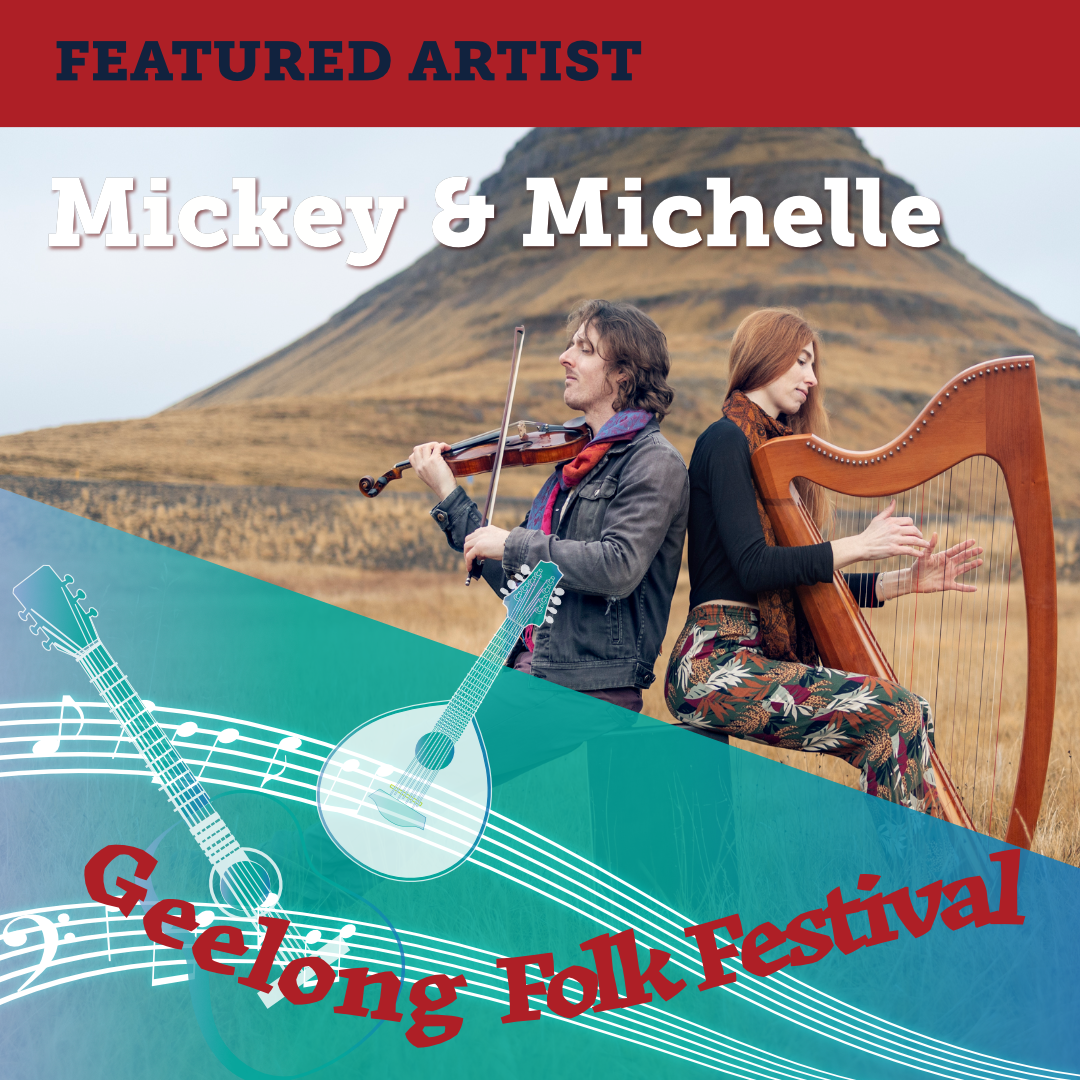
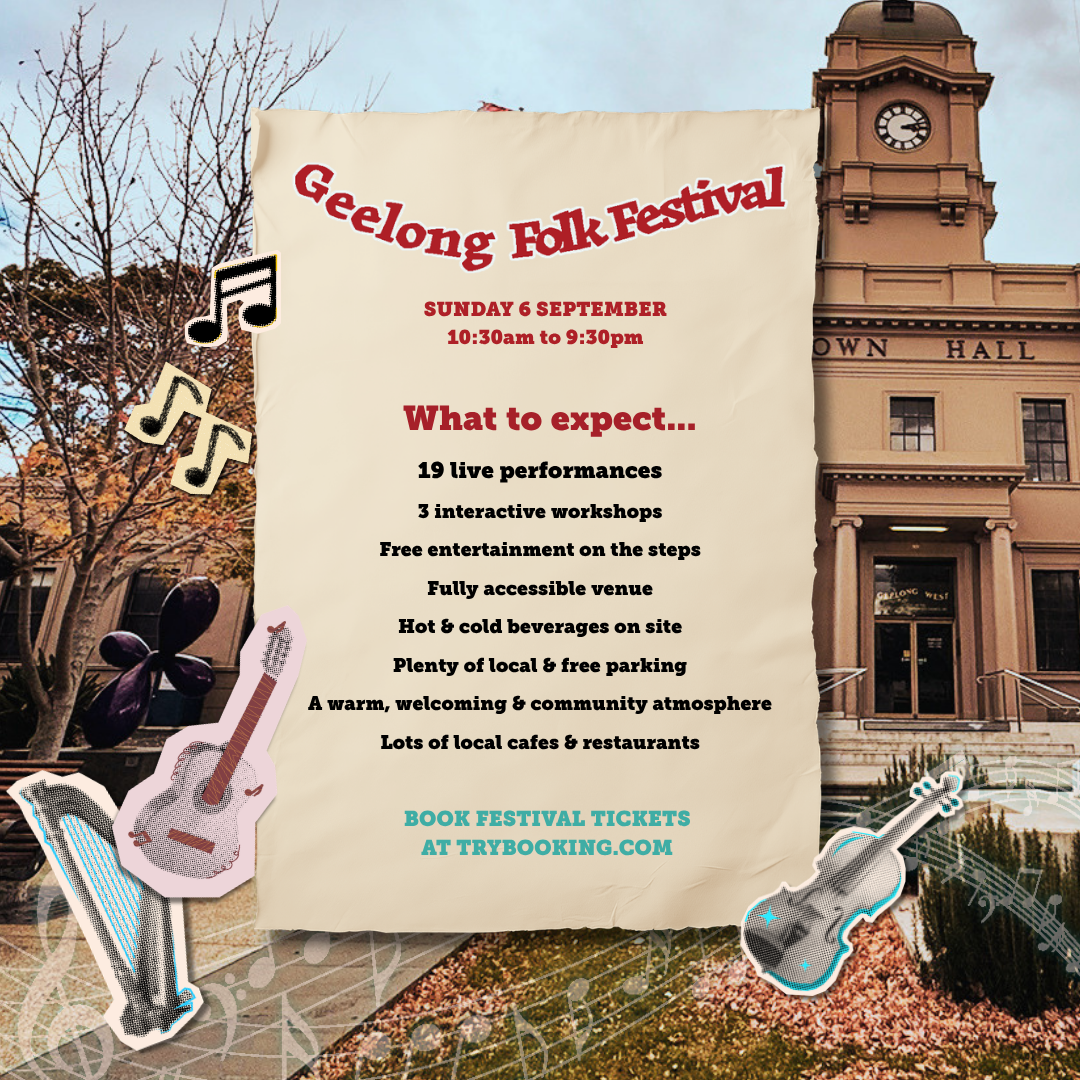
The festival, ‘GFF26’, was scheduled for Sunday 6th September 2026 at the Geelong West Town Hall, and some of the best folk artists in Australia played a wide variety of folk, blues and bluegrass. There were also interactive workshops giving the audience the opportunity to take part and sing-along.
Committee Secretary Merri Winter called out for social media support on the local Portarlington Facebook Community group, and that’s the call I answered, offering my services. I met with Merri over coffee, and we agreed that I fit their requirements and could help deliver on their objectives.
Making the most of an engaged audience
Not knowing much about folk music, I was unaware of the popularity of this genre. When I started researching, I realised there really was a lot of love for this traditional style of music. The Port Fairy Folk Festival was already well established (originally founded by some of the committee members from the Geelong Folk Club!) and well attended, so I felt quite confident that we could find an engaged and willing audience for the re-ignited Geelong festival.
I also attended one of the club sessions and thoroughly enjoyed not only the music performed by the talented club musicians, but also the comradery and community atmosphere. This inspired me further and gave me a good sense of the sentiment behind the festival that I needed to capture in the social media campaign..
What I did
Planning and foundations. With five months to build awareness and engagement, I set up a social media plan that considered all the necessary requirements including Facebook event, tracking, booking site, website landing page, budget available, measures and metrics.
Posting calendar. The festival creative had already been established by one of the very artistic committee members, so it was up to me to leverage that across all the posts. I broke up the five months into three phases; awareness, consideration and purchase and planned the post copy and design accordingly for both organic and paid activity.
Growing the audience. The folk club already had a Facebook page with approx. 1,000 followers, so this was a good base to start from. I started posting organically 1-2 posts per week to boost visibility and engagement, a pre-requisite ahead of the paid campaign activity.
Setting up Instagram. To further increase reach within a younger audience as well as performers, I set up a new Instagram account and built a following of 150+ to extend reach and again, enhance presence ahead of the paid campaign.
Capturing the event day. On the day of the festival I captured as many of the artists on camera as possible, to ensure the vibe of the event was translated on the social channels. It was important for our audience to have a way of sharing their feedback and for those who couldn’t attend to have a way of supporting it. The content will also serve as valuable material for the promotion of the next event.
“Sam Sinclair brought structure and purpose to our marketing efforts. She quickly gained an understanding of the dynamics of folk festivals and helped us properly identify and target our potential patrons. Without Sam’s input we would not have established our online presence or reached so many people.”
The outcome
The festival was well attended across paid ticket entry (202) and walk-ups to the free entertainment on the steps of the town hall. Despite numbers being lower than target (we were up against it being Father’s Day), there was a great deal of energy and positivity among the artists and audience, clearly happy to have their event back after so many years. The feedback was warm and positive from those who attended, particularly on the quality and variety of the line-up, and how smoothly the day came together.
““It was a success! There was energy in the air from the start, and we all enjoyed ourselves,” said Phil Lester, Chairman of the GFMC.
Organic content was the backbone of the GFF26 promotion effort. Across five months we published 86 posts, reached over 100,000 people on Facebook (89% of that earned organically rather than through boosting), and grew the page by 387 new followers, a lasting audience asset that carries into GFF27.
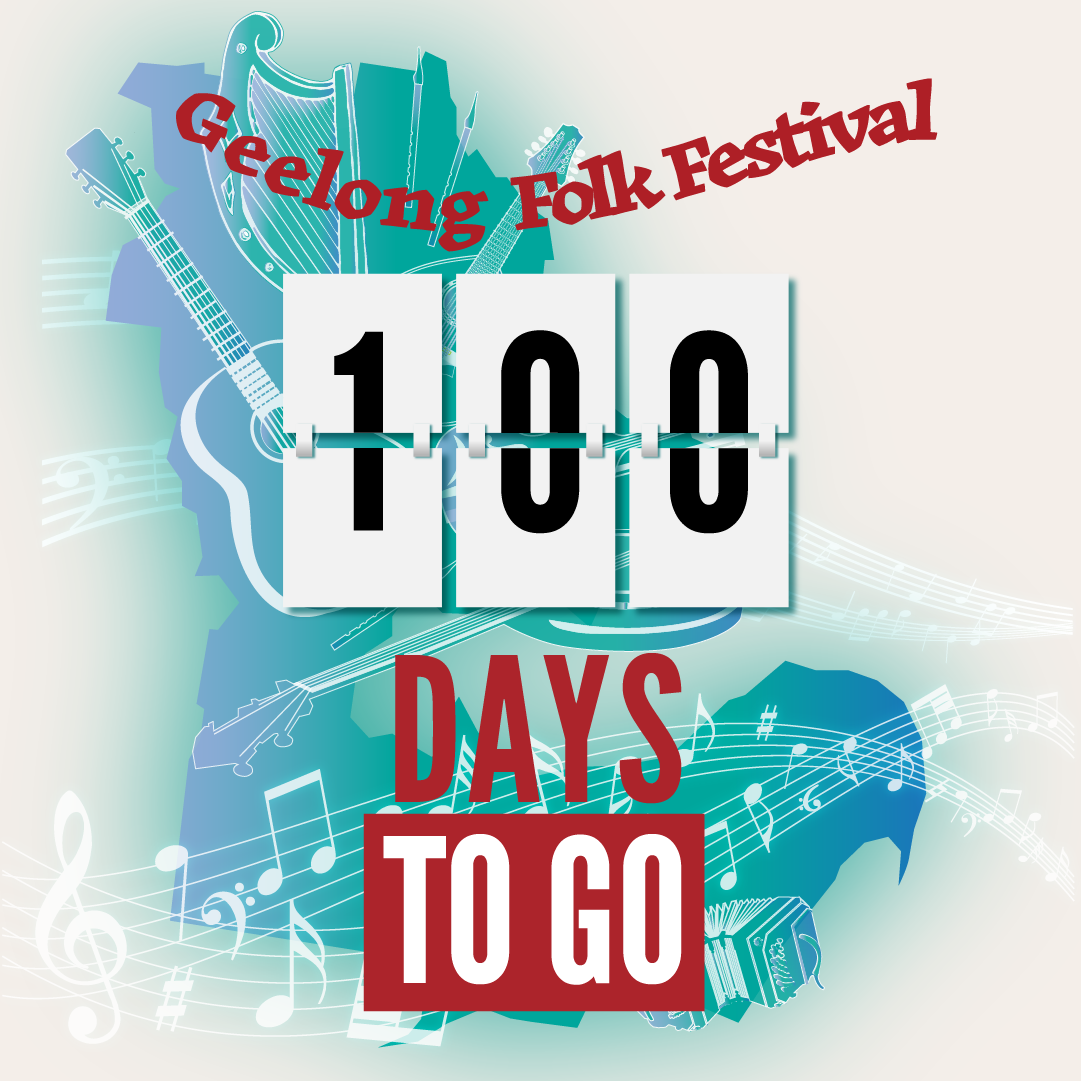
The strongest results came from milestone and lineup content: the 100-days-to-go countdown reached 8,658 people, and the first lineup announcement became the single biggest link-click driver of any post in the campaign, generating 149 clicks on its own. Real photos of the venue, the artists, and the club's own sessions consistently outperformed generic promotional graphics, reinforcing that community authenticity resonates. This organic groundwork likely explains why direct and search traffic outsold paid Facebook referrals for tickets: months of consistent, engaging content built enough awareness that people searched for the festival by name rather than needing to be retargeted by ads. For an inaugural event on a modest budget, that's a strong return on the time invested.
The paid Facebook campaign ran to a deliberately modest budget: $749 spent of the $1,000 allocated across the full five-month campaign, narrowing to two tightly-targeted local audiences in the final stretch. In the last month alone (8 August – 6 September), $283.65 delivered 46,388 impressions and reached 23,062 people in the Geelong region. That spend split roughly 40/60 between a smaller retargeting audience of people already familiar with the page and a broader cold Geelong-region audience.
Paid Facebook referrals directly tracked 31 ticket sales ($2,170), a modest but likely undercounted contribution given TryBooking can't distinguish paid-clicked traffic from organic once both pass through its booking event page. Because TryBooking has no capacity for pixel-based conversion tracking, a precise cost-per-ticket isn't calculable. The campaign was disciplined, came in 25% under budget, and delivered a targeted strategy.
“Thanks GFMC volunteers, organisers and performers for a fantastic day. We really enjoyed all of the music and the performances.”
“Thank you, it was a fantastic day!!! I felt so lucky to have this amazing talent in my hometown.”
“I had a great day going from the main stage to the open mic stage – well done to all involved.”
If you need support to establish your marketing foundations or ongoing support for your marketing activities,
contact me for a free 30-minute chat.